Introduction to On-Page SEO
Having only a website isn’t enough anymore! In addition to having a web site, you also must have your content available on major search engines such as Googlehttps://www.semrush.com/. This is the function of on page SEO, which refers to optimizing individual pages for search engines so that they rank higher in search results, as well as by people using those engines for their personal usage.
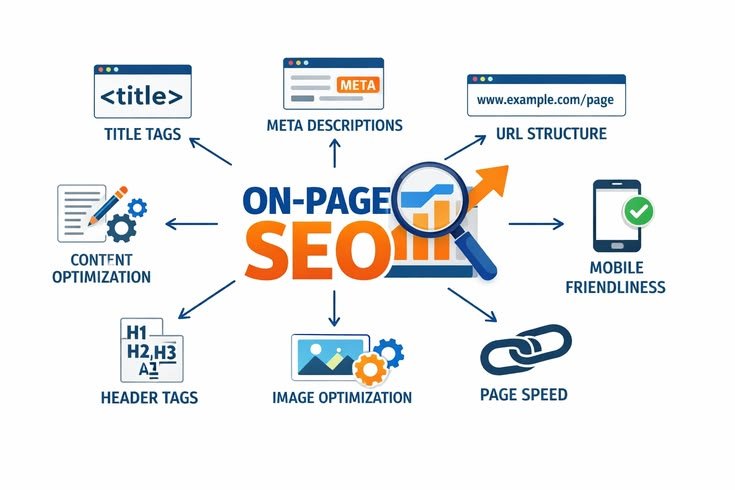
Understanding the Meaning of On-Page SEO
On-page SEO is the optimization methods employed directly on webpages. These assist search engines in understanding demand for the content of this page and its importance when relating to user queries. Some examples are optimizing content, title tags Our Wesite, headings and images as well as links within a webpage.
Why On-Page SEO Is Important
On-page SEO is very important to help with a web site’s search engine rankings as well as increase organic traffic and increase the engagement of its users. When a web site page is properly optimized, it will make it much easier for search engines to crawl and index that content resulting in more visibility for that web site and more potential customers.
The Role of High-Quality Content On-page SEO
Search engines rank content based on its relevance to users. Your site’s ranking is determined by the quality of your content and how it responds to user need. Developing quality content that addresses your audience’s problems and questions will improve your website’s search ranking, authority, and ultimately drives traffic to your site.
The Importance of Keywords in On-Page SEO
Search engines utilize keywords to give their users appropriate material based on the keywords they include. Differentiating your search engine optimization (SEO) success from that of your competition requires you to use appropriate keywords on your website so that the search engine knows what type of material is on your site, which ultimately affects where you appear within the rankings.
When using appropriate keywords throughout all levels of your website (content, title tags, and header tags), your chances of being found by users searching for appropriate keywords will increase.
Keep in mind that when you are choosing appropriate keywords and using them on your site, you must avoid “keyword stuffing” simply in an attempt to get higher search engine rankings.
Optimizing Title Tags and Meta Descriptions
The following elements exist in search engine results pages (SERP): Title tags and Meta descriptions. The combination of a good title tag and a good meta description leads to more clicks on your page. They should describe the page and also have keywords in them.
Using Headings for Better Content Structure On-Page SEO
For example, using headings such as H1, H2, and H3 is important when arranging content to increase its readability. Well-structured headings enable users and search engines to understand the hierarchy of content presented in the document.
Creating SEO-Friendly URLs
The ideal URLs must be concise, explanatory, and easily understandable. SEO-friendly URLs assist the search engine crawlers as well as the user to recognize the content of a page easily.
The Importance of Image Optimization
Imaging increases the visual attractiveness of websites, but they should be optimized for SEO too. Image compression, use of relevant image names, and alt text will help in making your pages fast while assisting in SEO by allowing search engines to identify the contents of images.
Internal Linking and User Experience
An internal link is an HTML link that can be used to link two web pages on the same website. Internal linking plays an important role in allowing search engines to locate extra information in your website.
Website Speed and Mobile Optimization
Website optimization for speed and mobile-friendliness enhances user experience and is preferred by search engines. Optimized websites for speed and mobile-friendliness form an integral part of an effective on-page SEO strategy.
Conclusion
On page SEO is the first thing that must be done for proper search engine optimization. Through the optimization of the content, keywords, structure, and the user experience, one will be able to increase the ranking of their website and get more traffic.